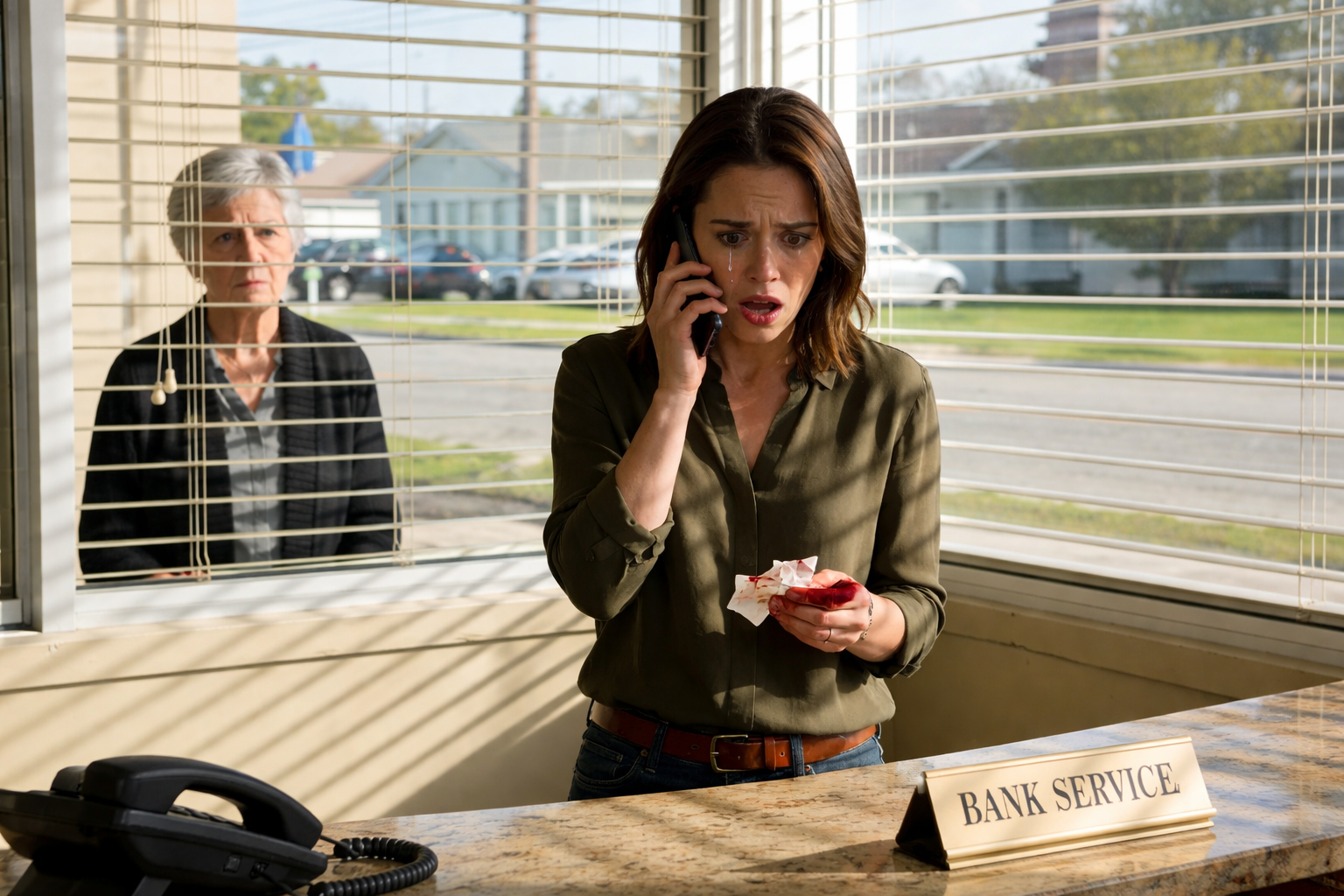
My mother in law, Diane Whitaker, insisted we dress up for the bank. “You do not walk in with one billion dollars looking like you are buying groceries,” she said while smoothing the lapels of her cream blazer with practiced elegance.
I laughed at first because it sounded like one of her dramatic exaggerations, but the cashier’s check resting inside her designer purse made the situation impossible to ignore since the number printed on it read $1,000,000,000, the result of the recent sale of Whitaker Global Freight, the logistics company my husband Tyler and his parents had built over three decades in Dallas, Texas.
She explained that I was only accompanying her because Tyler had become too emotional after the sale and she wanted someone calm and reliable beside her while handling the paperwork. The banker who greeted us sat behind a polished marble desk with a tidy brown bun and a name tag that read Caroline Foster, and her polite smile carried the tight patience of someone who had already dealt with too many complicated clients that day.
Diane handled every word of the conversation while sliding forms across the desk with absolute confidence.
“We will be opening a new account in my daughter in law’s name,” Diane said smoothly. “Her name is Grace Whitaker. All the funds will be deposited there as part of a family strategy.”
The phrase sounded strange in my ears, yet I told myself wealthy families often had complicated financial plans that ordinary people never understood. Caroline’s eyes moved between Diane and me before settling briefly on the cashier’s check, and the subtle tightening of her jaw suggested that something about the situation bothered her.
Halfway through the paperwork Diane stood up and laughed lightly while reaching for her purse strap. “Too much coffee this morning,” she joked before heading toward the restroom and leaving her purse and that enormous check on the desk beside Caroline.
That was when Caroline acted. She lowered her voice slightly and slid a folded deposit slip across the counter as if she were simply handing me another routine document.
“You dropped this,” she said loudly enough for nearby customers to hear.
I opened the slip under the desk expecting a missing signature line or another form to complete, but instead I saw one word written in quick block letters that made my stomach drop.
RUN.
For a few seconds I assumed it must be a strange joke because nothing around me looked unusual, yet when I looked up I saw the banker’s eyes watching me carefully while her fingers gripped the pen so tightly that her knuckles turned pale. She gave the faintest shake of her head, so small that no one else would notice, and in that instant I understood she was warning me about something serious.
My mind began racing through everything Diane had said earlier about the account being placed in my name because I had the cleanest financial history in the family. I suddenly realized that I had signed several documents without reading every detail.
Fear surged through my chest.
“I am so sorry,” I stammered while clutching my stomach. “I think something I ate is making me sick. I need a restroom or a trash can right away.”
Caroline immediately called another teller and nodded supportively while keeping her voice calm. “Of course, take your time,” she said as if nothing unusual had happened.
Instead of turning toward the hallway with the restrooms I walked directly toward the glass doors, pretending to struggle with nausea while gripping my purse tightly. The security guard glanced at me briefly and then looked away without suspicion.
The moment I stepped outside the hot Texas air hit my face and cleared my head instantly.
I continued acting sick until I reached the corner three blocks away, where I finally stopped and leaned against a brick wall while gasping for breath.
Then I did the only thing that felt safe. I ran to my parents’ house.
Twenty minutes later I sat on the bed in my childhood bedroom with my back pressed against the door while my mother, Rachel Monroe, stared at me in confusion and my father, Harold Monroe, stood beside the dresser with his arms folded. My father had spent most of his career as a bank auditor, which meant numbers and financial risks were second nature to him.
“Tell us again,” he said slowly. “Start from the beginning.”
I handed him the crumpled note with trembling fingers. “Mom, Dad, Diane took me to deposit a billion dollars today and the banker slipped me this note and told me to run because something was wrong.”
My father read the word once and his expression hardened in a way I had seen only a few times before during serious discussions about fraud investigations. Without saying another word he picked up his phone and called a former colleague who now worked in the regional risk department for the bank.
Within fifteen minutes the call was on speaker and a man introduced himself as Anthony Delgado, head of risk management for the region. As my father explained the situation Anthony listened carefully before responding with a quiet seriousness.
“We have been monitoring Diane Whitaker for several weeks,” Anthony said. “Several foreign transfers connected to companies she controls triggered internal alerts, and this morning’s deposit activated every fraud flag in our system.”
My mother’s voice rose in disbelief. “If you suspected her, why let her walk into the branch with my daughter sitting beside her?”
Anthony replied patiently that investigators were already coordinating with federal authorities because stopping the transaction too early might allow the funds to disappear offshore before evidence could be secured.
Then another voice joined the call. The woman introduced herself as Special Agent Megan Lawson with the FBI.
“Ms. Whitaker,” she said, addressing me formally, “your name appeared in several documents connected to the investigation. We needed to know whether you were involved or simply being used.”
“I had no idea about any of this,” I said quickly. “She told me the account was for a family trust to protect the grandchildren’s future.”
Agent Lawson explained that Diane had been operating an investment fund among friends and business associates while promising safe returns backed by the reputation of the family company. According to investigators several retirement accounts had already been emptied and redirected into risky offshore ventures.
My father muttered a frustrated curse under his breath.
I felt sick as memories replayed in my mind, especially Diane’s constant reassurances that everything she did was for the family’s benefit.
“Why would the banker tell me to run instead of just calling security?” I asked.
Anthony answered that the banker had already alerted the fraud team and security officers, but if I had signed certain documents I might have been listed as a co conspirator in the financial scheme.
Agent Lawson then asked if I would be willing to help them keep Diane talking long enough for investigators to gather final evidence.
My parents immediately protested while speaking over each other, yet the agent waited calmly until the room fell quiet.
“If she escapes with that money,” Lawson explained, “every victim tied to her investment fund will lose everything. You are the only person she still trusts completely.”
The thought of my husband Tyler filled my mind because he still believed his mother was simply strict about money, not capable of large scale fraud.
After several long seconds I nodded slowly.
“If helping you will stop this and keep my name clear,” I said, “then I will do it.”
Three minutes later Diane called my phone.
“Grace, where are you,” she demanded sharply. “The manager said you ran out of the bank. Do you realize how that makes me look?”
I forced my voice to sound embarrassed while glancing at the unmarked FBI car parked outside my parents’ house.
“I had a stomach emergency and panicked,” I said quickly. “I am sorry.”
She sighed impatiently before instructing me to meet her at a larger downtown branch where she believed the staff would handle important clients more efficiently.
An hour later I sat in a private conference room wearing a tiny microphone taped beneath my collar while Agent Lawson and another investigator posed as bank employees outside the glass walls.
Diane entered briskly carrying her purse and wearing the same confident smile.
“These banks act as if they have never seen a large check before,” she complained while sitting down. “Now let us finish what we started.”
She slid a folder across the table and pointed to the signature lines.
“Sign here and here,” she said calmly. “As trustee you will hold the account while I transfer the funds to a safer international structure.”
I kept my voice steady while asking the question Lawson had prepared.
“Why does it need to go overseas if the money is ours?”
Diane hesitated before answering with irritation. “Because some investors have become impatient and are asking questions, and once the funds are in Switzerland no one will be able to interfere.”
The moment the words left her mouth the door opened and Agent Lawson stepped inside with two federal officers.
“Diane Whitaker,” Lawson announced clearly, “you are under arrest for wire fraud, securities fraud, and identity theft.”
Diane’s expression twisted with fury as the agents placed handcuffs on her wrists.
“You betrayed me,” she hissed while glaring at me.
I swallowed the lump in my throat and answered quietly.
“No,” I said. “You betrayed everyone else.”
Outside the building my husband Tyler stood waiting with confusion and heartbreak written across his face. When I finished explaining everything that had happened he held my hand tightly and whispered that he was sorry for ever asking me to trust his mother without question.
The investigation lasted months, and the recorded conversation together with the banker’s note became key evidence in court. Many of Diane’s former investors eventually thanked me for leaving the bank when I did because my decision helped investigators recover a large portion of the stolen money.
The small piece of paper with three letters now rests inside a fireproof box in our closet beside important family documents.
RUN.
It changed everything, yet it also saved us.